
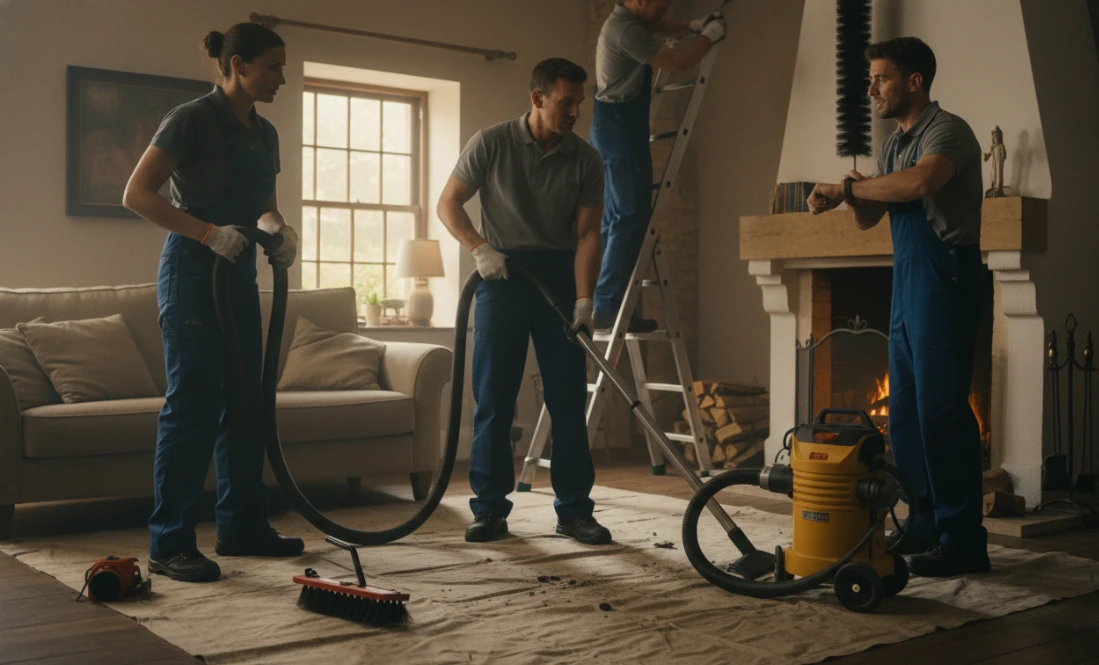
When preparing for a professional service, homeowners often prioritize two questions: “How much will it cost?” and How long does a chimney sweep take? While the latter might seem like a simple question with a single answer, the reality is that the duration of a professional chimney cleaning is highly variable, influenced by a complex set of factors ranging from the appliance’s usage to the technician’s inspection requirements.
For a standard, well-maintained chimney requiring only a routine cleaning and Level 1 inspection, the average time investment is relatively brief: between 45 minutes and 90 minutes. This window covers the full service, from the moment the chimney sweeper sets up their drop cloths to the time they pack their equipment and provide the final safety report.
However, this timeframe is the best-case scenario. When a chimney has been neglected, is complex, or requires a deeper inspection, the job can easily extend to two, three, or even four hours. Understanding the variables that affect this time is key to scheduling effectively and managing expectations with your chosen chimney sweep service.
Chimney Sweep Time Estimation at a Glance
The following table summarizes how different factors influence the time your chimney sweep service appointment will take, helping you plan your day around the necessary safety maintenance.
| Factor | Description | Estimated Time Added | Total Time Range |
| Standard Service | Level 1 Inspection + Routine Sweep (light creosote) | 0 minutes | 45 to 90 minutes |
| Moderate Creosote | Stage 2 buildup requiring aggressive brushing/rotary system | +30 to +45 minutes | 75 minutes to 2 hours |
| Major Blockage | Removal of a large chimney sweep bird nest or debris | +1 to +2 hours | 1.5 hours to 3 hours |
| Level 2 Inspection | Required camera inspection for real estate/damage assessment | +1 to +1.5 hours | 1.5 hours to 3 hours |
| Multi-Flue System | Each additional flue to be swept and inspected | +45 to +60 minutes per flue | 2 hours+ |
| Stove Insert Removal | Necessary removal of a wood stove insert for flue access | +30 to +60 minutes | 1.5 hours to 2.5 hours |
The Routine Sweep (45 – 90 Minutes)
A routine cleaning of a single-flue chimney is a highly standardized process driven by efficiency and cleanliness. The chimney sweeper adheres to a strict procedural checklist to minimize mess and maximize safety.
1. Setup and Preparation (10–15 Minutes)
The single most crucial step for the homeowner is the setup, which accounts for the first portion of the job. The technician, often evoking the professionalism associated with the traditional top hat chimney sweep, will bring large tarps and drop cloths into the home. These are meticulously laid out in front of the fireplace opening and around the hearth to protect flooring, furniture, and surrounding areas from soot. A powerful, specialized HEPA-filter vacuum system is then set up and sealed around the flue opening or appliance. This highly controlled environment ensures that no soot or debris escapes into the living space, which is a hallmark of a high-quality chimney sweep service.
2. The Sweeping and Brushing (20–40 Minutes)
This is the core of the service. Using specialized brushes either traditional rods or power rotary cleaning systems the chimney sweeper works from the top down (most common for modern professionals using rotary systems) or the bottom up (traditional rod method). The brushes agitate the inner walls of the flue, scraping off loose soot and creosote. This debris is immediately captured by the running vacuum system sealed at the bottom.
The time taken here depends on the type of fuel, the number of flues, and the complexity of the flue’s path. A straight, wood-burning chimney with light creosote is a quick job; a zigzagging oil flue with tight corners takes longer to navigate and requires specialized, flexible rods.
3. The Level 1 Visual Inspection (15–20 Minutes)
A standard chimney sweep is incomplete without a Level 1 Inspection. This is a visual check of readily accessible portions of the chimney exterior, interior, and appliance. The technician uses a flashlight or basic camera to look up the flue (from below) and physically inspect the firebox, damper, smoke chamber, and hearth. They are checking for:
- Clearance issues (combustible materials too close to the firebox).
- Obvious structural defects (cracks, missing bricks).
- Any presence of severe creosote buildup (the 1/8 inch danger zone).
This comprehensive, yet swift, initial inspection concludes the standard 45-90 minute service window.
Factors That Dramatically Extend the Time (2 – 4+ Hours)
The routine timeframe is quickly exceeded when unforeseen problems or special requirements arise. These are the primary reasons a chimney sweep service appointment might run into several hours.
1. High-Level Creosote and Tar Glaze
The largest time-eater is the presence of Stage 2 (hard, crunchy flakes) or Stage 3 (dense, glossy glaze) creosote. This level of build-up cannot be removed by simple brushing.
- Time Impact: A routine sweep may fail to remove Stage 3 creosote. The sweep must then apply a specialized chemical treatment (creosote remover) that is brushed onto the glaze, left to cure, and then mechanically removed using a more aggressive rotary chain system. This process can add 30 minutes to 1.5 hours to the job time, plus the curing time. If multiple applications or specialized flail-head removal tools are required, the time extends further.
2. Dealing with Blockages and Animal Nests
An appointment can double in time if the chimney sweeper discovers a major blockage. Blockages are often caused by the activity of a chimney sweep bird, such as Jackdaws or Chimney Swifts, which build massive, densely packed nests in the flue during the off-season.
- Time Impact: Removing a large, stubborn chimney sweep bird nest or a large animal (like a raccoon) from the flue requires specialized retrieval tools and often a significant amount of manual breaking up of the material before it can be vacuumed out. This can take 1 to 2 hours of careful labor, especially since it must be done with precision to avoid damaging the flue liner.
3. The Level 2 Camera Inspection
A Level 2 Inspection is legally required in several scenarios (new home purchase, property transfer, post-chimney fire, or appliance change) and is far more intensive than a Level 1 visual check.
- Time Impact: This involves using a specialized, high-resolution camera system to visually inspect the entire length of the flue lining from top to bottom. The technician moves the camera slowly, stopping to record and document any cracks, missing mortar joints, or breaches in the flue structure. This detailed documentation and physical camera work can easily add 1 to 2 hours to the standard service time. It transforms the service from a simple cleaning into a comprehensive diagnostic assessment of the entire chimney system’s integrity, which is necessary for insurance and real estate purposes.
4. System Complexity
The physical structure of the chimney itself impacts time.
- Multi-Flue Systems: A chimney serving a basement furnace, a gas fireplace, and a wood stove all within the same stack requires the chimney sweeper to clean and inspect three separate flues, effectively tripling the sweep time.
- Access Issues: Difficult roof access, a flue that does not line up directly with the firebox (offset flue), or a stove insert that must be temporarily removed for proper access will also add significant time, as setup and maneuvering are much more complex.
Planning and Professionalism: Finding the Right Service
When searching for a reputable company, such as a 1 chimney sweep or one of the top-rated local businesses found by searching for chimney sweeps near me, it is crucial to communicate the state of your chimney upfront to get an accurate time estimate and to understand the corresponding chimney sweep prices.
A professional service should always ask about:
- Usage: How many cords of wood/gallons of oil are burned per year?
- Date of Last Sweep: When was the last full cleaning?
- Smoke Issues: Has the fireplace been smoking recently? (A sign of a blockage).
- Appliance Type: Is it an open fireplace, a wood stove insert, or a furnace flue?
The Relationship Between Time and Price
It is a common error to choose a chimney sweep service based solely on the cheapest chimney sweep prices. The lowest price often corresponds to the shortest time a quick, inadequate dusting that skips the proper Level 1 inspection and certainly won’t address heavy creosote or a hidden blockage.
A legitimate, certified professional understands that a proper, thorough cleaning and inspection cannot be rushed. If a quote seems too low, it likely means the technician is only budgeting for the quick 45-minute sweep, and will charge exorbitant fees for the extra time required for unexpected issues. A responsible chimney sweeper will allocate a full 90-minute to 2-hour window for a standard, first-time sweep, ensuring they have the time to handle minor complications without rushing the critical safety steps.
In conclusion, while the simple act of cleaning soot and ash is relatively quick, the comprehensive nature of a professional chimney sweep service which includes mandatory safety inspections, dealing with hazardous creosote, and the meticulous removal of debris ensures that the total time required is often closer to an hour and a half for a well-maintained system. Homeowners should plan for a two-hour window to allow for a thorough and unhurried service, guaranteeing both safety and peak efficiency for their heating appliance. Booking an a 1 chimney sweep professional with the time to do the job right is the best guarantee of a safe home.

