
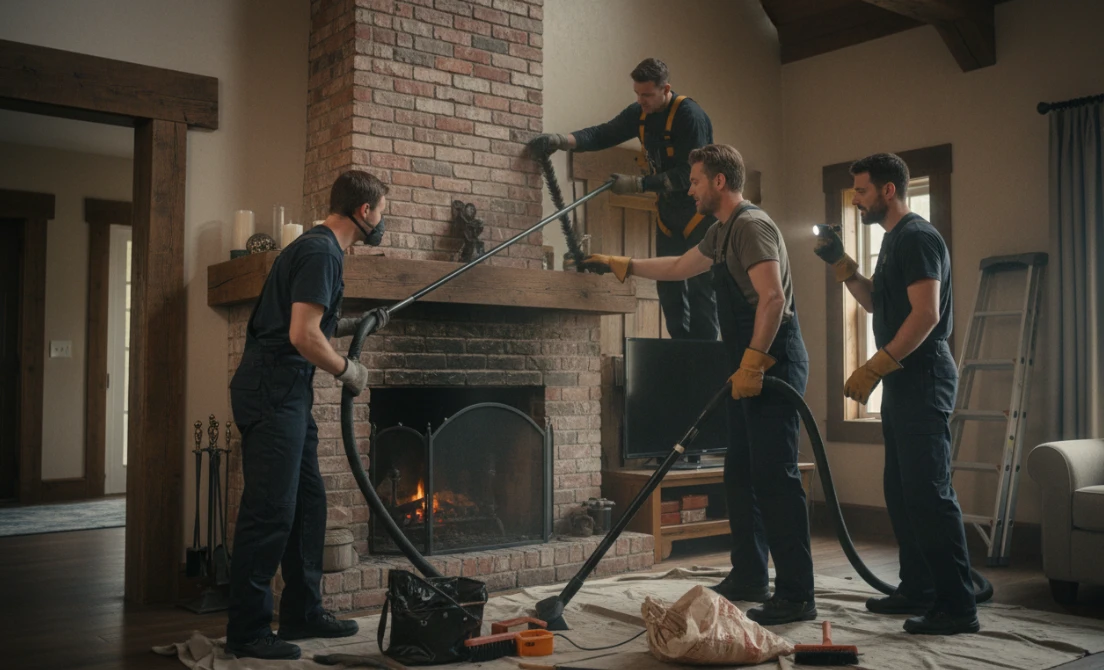
For many homeowners, the fireplace or wood stove is the heart of the home, conjuring images of warmth, comfort, and cozy winter nights. Yet, a heating appliance with a chimney is a system that requires strict maintenance, and understanding how often you should sweep a chimney is not just a matter of cleanliness it is a critical safety issue that directly protects your home and family.
While the quaint, traditional image of the soot-covered chimney sweeper in a top hat chimney sweep is a charming relic of history, the modern chimney sweep service is a professional, high-tech operation focused on fire prevention and appliance efficiency. Ignoring the need for a sweep can lead to dangerous creosote build-up, blockages, and costly damage.
The consensus among fire safety experts and industry bodies is clear: you should never go more than a year without having your chimney system inspected and cleaned. However, the exact cleaning frequency the “sweep” depends entirely on what you burn, how often you burn it, and the efficiency of your appliance. A single annual inspection is the absolute minimum, but for many homeowners, a much stricter schedule is necessary to mitigate fire risk and carbon monoxide hazards.
Chimney Sweeping Frequency at a Glance
The following table summarizes the recommended sweeping schedule based on the fuel source and usage level, highlighting that a mandatory annual inspection is the foundation of all chimney care.
| Fuel/Appliance Type | Recommended Sweeping Frequency | Key Fire Safety Concern |
| Wood Stove / Fireplace (Heavy Use) | Quarterly (or every 30-50 fires) | Rapid buildup of highly flammable creosote. |
| Wood Stove / Fireplace (Regular Use) | Twice Annually (before & mid-season) | Managing creosote to stay below the 1/8 inch danger threshold. |
| Coal (Bituminous) | Quarterly, when in use | Heavy soot/tar deposits and corrosive flue damage. |
| Oil / Gas Appliance | Annually (Inspection with sweep as needed) | Debris blockages, carbon monoxide (CO) backup, and flue corrosion. |
| Pellet Stove | Annually | Corrosive fly ash and potential for appliance inefficiency. |
The Fundamental Rule: The Annual Inspection
The National Fire Protection Association (NFPA), through its comprehensive safety code NFPA 211, provides the foundation for all chimney maintenance. Their primary recommendation is that all chimneys, fireplaces, and vents should be inspected at least once a year. This annual maintenance, typically a Level 1 inspection, is recommended even if the appliance is rarely used, as it checks for basic structural soundness, proper connections, and the presence of combustible deposits or chimney sweep bird nests, or other debris.
The actual sweeping should occur immediately if the inspection reveals a measurable deposit of creosote or other combustible material. The Chimney Safety Institute of America (CSIA) specifies that if creosote accumulation is 1/8 inch or more, immediate cleaning is mandatory. This thin layer is all it takes to fuel a destructive chimney fire. This threshold is considered a dangerous point because it signals that the chimney has enough flammable material to ignite under high heat conditions.
Determining the Sweep Frequency by Fuel Type and Usage
The most significant factor influencing chimney cleaning frequency is the fuel source, as different materials produce vastly different levels of creosote and soot the primary fire hazard. In addition, the way an appliance is used (e.g., restricted air for longer burns) can heavily influence the rate of deposit build-up, often necessitating more frequent sweeps.
1. Wood-Burning Fireplaces and Stoves
Wood is the fuel that demands the most vigilance. When wood is burned, particularly unseasoned or “green” wood, it releases volatile organic compounds that condense inside the cooler parts of the flue as a highly flammable, tar-like substance called creosote. Inefficient burning, such as slow, smouldering fires, dramatically increases creosote formation.
- Quarterly Sweeping for Heavy Use (or Every 30 to 50 Fires): Industry experts like the National Association of Chimney Sweeps (NACS) recommend sweeping a wood-burning chimney quarterly when in use if you are burning wood every day or multiple times per week during the heating season. This aggressive schedule is crucial for high-volume users.
- Twice a Year for Regular Use: For appliances with regular use (e.g., burning daily in winter) or those burning softwoods (like pine, which contain more resin and moisture), sweeping twice a year before the heating season and mid-season is considered best practice to manage accumulation.
- Annual Sweeping (Minimum): Even if use is light, an annual sweep is required to remove any small accumulation, check for hidden issues, and ensure all components are functioning correctly before the start of a new heating cycle.
2. Coal and Oil Appliances
These solid and liquid fuels also create corrosive and sticky residues that demand frequent attention. While not creating creosote, they create equally harmful deposits.
- Bituminous Coal: This type of coal produces heavy soot and tar deposits that can quickly accumulate. Quarterly sweeping when in use is often necessary to prevent blockages and long-term damage caused by the sulfur content in the soot.
- Smokeless/Anthracite Coal: This cleaner fuel requires less sweeping, with a minimum of at least once a year recommended to remove the fine, dense ash and check for any corrosive byproducts.
- Oil: Oil-burning appliances produce a soft, sooty residue and acidic deposits that can corrode the chimney’s interior and flue liner over time. A sweep is generally recommended once a year to remove these deposits and ensure structural longevity of the flue system.
3. Gas and Pellet Appliances
These fuels are much cleaner but still require annual professional attention. Gas and pellet chimneys primarily need to be checked for proper function and external blockages.
- Gas Fireplaces (Natural Gas or Propane): Gas burns cleaner and does not produce creosote. However, gas chimneys can still accumulate dust, debris, spiderwebs, and, most importantly, chimney sweep bird nests or other animal blockages. These blockages can prevent the safe venting of combustion gases, including deadly carbon monoxide. An annual inspection with a sweep every one to two years, as needed, is the standard, often focusing on inspecting the flue liner integrity.
- Pellet Stoves: Pellet appliances are highly efficient and clean-burning, but they produce a fine fly ash that is highly corrosive when combined with moisture. They require a professional cleaning once a year, in addition to the homeowner regularly cleaning the ash traps every 1–2 weeks during use.
The Silent Dangers: Why Regular Sweeping is Non-Negotiable
A professional chimney sweeper is not just removing ash; they are eliminating specific hazards that threaten the home’s safety and the occupants’ health, demonstrating the true value of the chimney sweep service.
Creosote: The Fuel for Fire
Creosote is the single biggest reason for a chimney fire. As a deposit from wood smoke, it comes in three stages of severity:
- Stage 1: Sooty, loose creosote that is easy for a standard chimney sweep service to remove with brushes and a powerful vacuum.
- Stage 2: Hard, crunchy, tar-like flakes that require more aggressive brushing and sometimes specialized power rotary tools.
- Stage 3: A dense, glossy, almost enamel-like coating that is extremely flammable and often requires specialized rotary tools or chemical treatments for removal. This is the stage most likely to lead to a severe chimney fire.
A chimney fire can reach temperatures over 2,000°F, potentially causing cracks in the flue liner that allow flames and heat to spread to the combustible materials (like wood framing) of the home’s structure.
Blockages and Carbon Monoxide
During the off-season, an uncapped chimney is a perfect nesting site. Chimney sweep bird concerns are common, with Jackdaws and the federally protected Chimney Swifts being particularly notorious for building massive nests that can completely block the flue.
A complete blockage whether from a nest, fallen leaves, or debris will prevent the safe escape of exhaust gases. This creates a severe risk of smoke and colorless, odorless carbon monoxide (CO) backing up into the living space, which can be fatal. This is why having a chimney cap is as important as the sweep itself, as the cap is the primary defense against blockages.
Addressing Blockages: The Chimney Sweep Bird
Dealing with an active chimney sweep bird nest requires special care due to legal protections. In the United States, most native birds, including the common nesting species like the Jackdaw and the protected Chimney Swift, are covered by the Migratory Bird Treaty Act.
- Legal Requirement: It is illegal to remove an active nest containing eggs or chicks. If a bird is nesting, a professional sweep must advise the homeowner to cease using the appliance and wait until the young have fledged and the nest is inactive (typically in the late summer/early fall).
- Post-Activity Removal: Once the nest is confirmed inactive, a professional chimney sweeper uses specialized tools to break up and remove the large quantity of nesting material, followed by a thorough sweep to ensure no flammable remnants remain.
- Prevention: After a nest is removed, a professional should install an appropriate chimney cap or bird guard to prevent the birds from re-entering the following season.
Finding the Right Professional: Chimney Sweeps Near Me
Because chimney maintenance is a safety-critical service, choosing a qualified professional is essential. When searching for chimney sweeps near me and terms like “a 1 chimney sweep,” look for companies with specific, recognized credentials.
- Certification: The Chimney Safety Institute of America (CSIA) and the National Chimney Sweep Guild (NCSG) are the leading certifying bodies. A technician certified by these organizations has passed rigorous exams and training covering fire safety, appliance function, and code compliance (NFPA 211).
- Insurance: Always verify that the chimney sweeper is fully licensed and insured.
- Reputation: Local business bureaus (like the BBB) and local guilds or associations often maintain lists of reputable, accredited companies. Service names like a 1 chimney sweep or references to a top hat chimney sweep (evoking professionalism) often indicate established local businesses, but credentials should always be checked.
The Cost of Safety: Chimney Sweep Prices
The cost of a chimney sweep service is a small investment compared to the expense of a chimney fire or carbon monoxide poisoning. Chimney sweep prices are not a fixed figure; they vary significantly based on the chimney type, the level of cleaning required, and the geographic location.
As a general guideline, a standard chimney sweeping service typically includes a visual inspection (Level 1) and mechanical removal of soot and creosote.
| Service / Factor | Average Price Range (US) | Key Factors Influencing Cost |
| Standard Chimney Sweep | $150 – $375 | Type of fuel (wood is generally higher), chimney height, type of appliance, and local cost of living. |
| Gas Fireplace/Vent Cleaning | $80 – $150 | Lower cost due to less soot, primarily an inspection/debris removal to check for CO hazards. |
| Heavy Creosote/Stage 3 Removal | $300 – $600 | Requires specialized tools (rotary system) or chemical treatments to strip the hard buildup; it is a time-intensive and technical service. |
| Debris or Animal Removal | $100 – $600 (plus sweep cost) | Depends on the complexity of the blockage (e.g., a large bird nest) and the difficulty of accessing the obstruction. |
| Level 2 Inspection | $150 – $1,000 | Required for new home purchases or system changes; includes camera inspection of the entire flue lining. |
In conclusion, while the annual inspection is a must, how often you should sweep a chimney is a usage-dependent question. For low-use gas fireplaces, an annual inspection is often sufficient, but for any appliance burning wood or coal, a frequency of two to four times per year is the safest recommendation. This proactive approach ensures your fireplace system is not only running at peak efficiency but, most importantly, is a safe source of heat for your home. Prioritizing regular maintenance is the smartest investment a homeowner can make in fire safety.

