
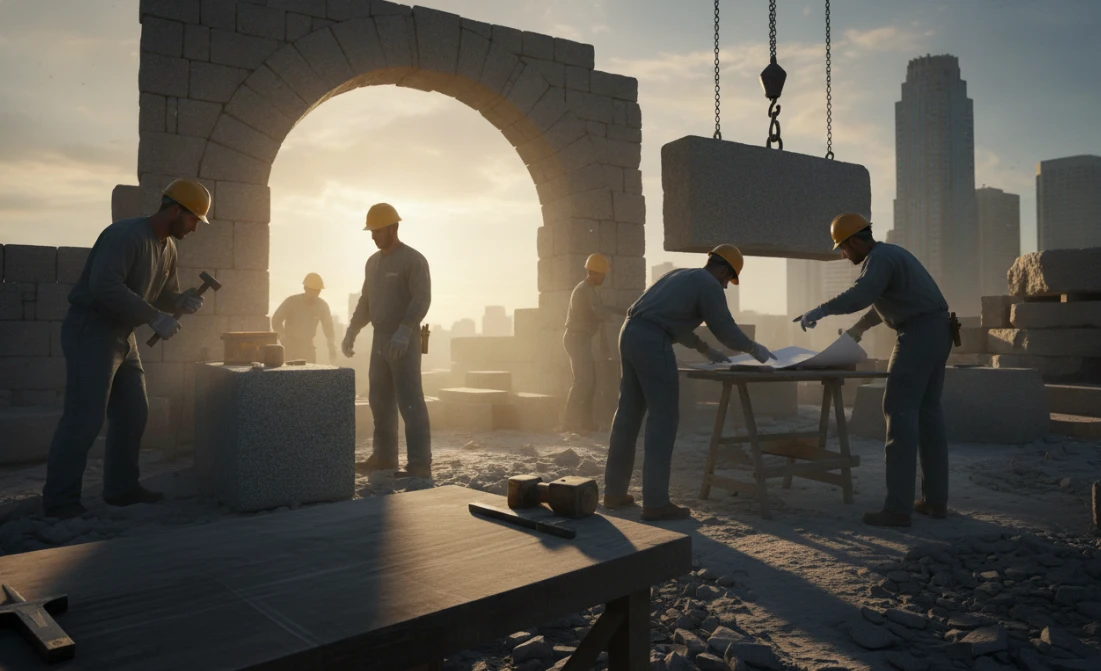
Stone masonry, at its essence, is the original building craft, a tradition stretching back millennia that continues to shape our physical environment today. It represents not just a method of construction, but an art form that transforms raw geological material like granite, sandstone, and marble into structures of immense beauty and legendary durability. While modern construction has introduced faster, cheaper alternatives like steel and concrete, the distinctive qualities of natural stone ensure that what is stone masonry remains a crucial and sought-after skill. The trade is experiencing a vital resurgence, driven by a renewed appreciation for sustainable, lasting materials and the critical, ongoing work of preserving the world’s rich architectural heritage. The deep satisfaction of crafting something that will last for generations ensures that the work of the stonemason is truly an enduring craft.
What is Stone Masonry?
What is stone masonry is a time-honored construction technique that involves the skilled art of building or repairing structures using natural stones, either cut to precise dimensions or left in their irregular, natural shape, which are then bound together with mortar. As one of the earliest trades in human history, dating back to the Neolithic period around 10,000 BC, it is responsible for the construction of some of the world’s most enduring architectural wonders, from the Great Pyramids of Egypt to the Gothic cathedrals of Europe.
At its core, stone masonry creates durable, fire-resistant, and aesthetically pleasing structures. The longevity of stone such as granite, limestone, sandstone, and marble ensures that these constructions can withstand centuries of weathering, making them a cornerstone of architectural heritage. While the basic principle of stacking stones with a binder remains constant, the artistry lies in the cutting, shaping, and arrangement of the stone units.

The Two Pillars of Stone Masonry: Rubble and Ashlar
Stone masonry is traditionally classified into two main categories based on the shape and uniformity of the stones used: Rubble Masonry and Ashlar Masonry.
Rubble Masonry
Rubble masonry utilizes raw or minimally processed stones, where the units are varied in shape and size. The irregularity of the stone faces results in wide mortar joints, giving the structure a rugged, rustic, and organic appearance. Because it relies on locally available, less-worked stone, it is often the roughest and most economical form of stone masonry.
- Uncoursed Random Rubble: This is the simplest and roughest form, where stones of widely different sizes and irregular shapes are laid without maintaining continuous horizontal courses. It requires a great deal of skill in selecting and orienting each piece for maximum stability.
- Coursed Rubble: In this style, stones are laid in horizontal rows or ‘courses’ of equal height, even though the individual stones within a course may still be irregular in shape. The uniformity of the courses provides a tidier appearance than random rubble while maintaining the rugged texture.
- Dry Rubble Masonry: A technique where stones are meticulously stacked and fitted together without the use of any mortar, relying solely on interlocking and pressure for stability. This method is exceptionally durable and is often used for retaining walls, boundary walls, and garden features, showcasing the mason’s mastery of fitting irregular shapes.
Ashlar Masonry
Ashlar masonry represents the most refined and precise form of the craft. It involves using stones that have been dressed, meaning they are carefully cut and shaped into uniform, precise blocks typically rectangular or square that are laid in regular, continuous horizontal courses. The high precision allows for very thin, neat mortar joints, sometimes as fine as 3mm, creating a smooth and elegant finish that is typically seen in monumental and historic institutional buildings, giving them an air of permanence and luxury. The quality of ashlar often defines the highest levels of stone masonry skill.
Ashlar has variations that define the face finish of the stone:
- Ashlar Fine Masonry: The face of each stone is cut to be perfectly smooth and uniform, resulting in a wall surface that is nearly seamless, often used for interior cladding or high-status facades.
- Rock-Faced or Quarry-Faced Ashlar: The edges of the stone are neatly cut to fit precisely, but the center face is left in its natural, rough state as it came from the quarry, offering a blend of precision and rustic appeal. This provides a strong, shadow-casting texture.
- Ashlar Chamfered Masonry: The edges of the dressed blocks are beveled or chamfered (cut at a 45-degree angle), which enhances the visual appeal and also protects the edges from weather damage, subtly highlighting each stone unit.
Specialized Forms of Masonry
The term “masonry” also covers construction with other materials, leading to two supporting specializations:
What is Brick Stone Masonry?
While often grouped together, stone masonry, and brick masonry use different fundamental materials. Brick masonry involves laying composite units (bricks) made from materials like clay, shale, or concrete, which are uniform in size and shape. what is brick stone masonry is not a distinct technical category but a descriptive term for structures where the two are used together, or where natural stone units are cut into the uniform shape of bricks. Stone masonry is generally heavier and more complex, requiring highly skilled cutting and shaping, whereas brick masonry is more uniform and often more cost-effective for large-scale construction.
What is Cast Stone Masonry?
What is cast stone masonry is a refined architectural precast concrete building unit manufactured to simulate the appearance of natural cut stone. It is an artificial stone product made from cement, natural or manufactured sands, crushed stone, and sometimes mineral coloring pigments, cast in molds to achieve the desired shape and color. Cast stone is a versatile, less expensive alternative to natural stone, often used for architectural trim, ornamentation, or as a veneer. It is highly valued because it is cheaper, more uniform, and often stronger than many natural cut building stones, providing a high level of aesthetic refinement without the intense labor of individual stone carving.
Techniques of the Stonemason
How to Cut Masonry Stone
The method of cutting stone depends heavily on the type of masonry being constructed, the hardness of the stone, and the level of precision required. how to cut masonry stone involves a blend of traditional tools and modern, high-powered machinery.
Hand Tools (For Rubble and Traditional Ashlar):
For shaping and splitting natural stone, masons use tools that rely on leverage and precision impact.
- Wedge and Feather System: A series of holes are drilled into the stone, and steel wedges (feathers) are inserted, followed by another steel wedge (shim). Tapping the shim with a hammer applies uniform pressure, causing the stone to split cleanly along the drilled line. This is a quiet, low-impact method preferred for large blocks of quarried stone.
- Chisel and Sledgehammer/Hand Tracer: A line is scored across the stone’s face using a chisel (or a hand tracer, which is like an axe for stone). Repeated, controlled striking along this line with a sledgehammer creates a weakness until the stone breaks along the desired plane, which is often crucial for creating the face side of the stone.
- Hand Point and Hand Set: These tools are used for dressing (refining) the surface, chipping away small, high spots to smooth or adjust the shape of the block. The hand point removes large material, while the hand set refines the surface texture.
Power Tools (For Modern Ashlar and Veneer):
For precise, straight, and fast cuts, power tools are used, always with a diamond-tipped masonry blade, which is essential for cutting hard stones like granite or quartzite.
- Angle Grinders and Circular Saws: Used for straight cuts on medium-to-large stones, with the option of wet cutting to reduce dust and lubricate the blade, extending the tool’s life and ensuring a cleaner cut.
- Masonry Saws or Tile Saws: Larger stationary saws used for high-volume, extremely precise cuts on stone tiles or veneer, often equipped with water recirculation systems for wet cutting.
How to Repair Stone Masonry
how to repair stone masonry is a critical aspect of the trade, particularly in the historic preservation sector. The process requires a careful, multi-step approach that prioritizes preservation over replacement wherever possible:
- Assess and Prepare: The mason must first identify whether the damage is superficial or structural, looking for loose stones, cracks, or severely deteriorated mortar. A thorough inspection guides the subsequent repair strategy.
- Remove Damaged Material (Raking Out): Damaged or loose stones are carefully removed, and crumbling mortar is raked out (ground down) using a chisel and hammer or a grinder with a special blade to a depth of about 10–15 mm. The remaining cavity should be cleaned of debris and often wetted (pre-wet) to prevent the new mortar from drying out too quickly, which would compromise its strength.
- Repointing: Repointing is the process of replacing old, worn-out mortar. A crucial step is matching the new mortar mix—in both composition (often a soft, breathable lime-based mortar for historic buildings) and color—to the original to ensure structural and aesthetic consistency. The new mortar is pressed firmly into the joints using a trowel or pointing gun and then tooled to the desired joint profile (e.g., concave, flush, weathered).
- Stone Replacement (Dutchman Repair): If a stone unit is too cracked, spalled (flaked), or eroded for in-situ repair, it may need replacement. In some cases, only the damaged portion is removed and replaced with a new, matching piece of stone, called a Dutchman repair. The replacement stone must be of a compatible mineralogy, porosity, and strength to prevent future failures in the surrounding historic wall and to maintain the building’s original performance characteristics.
Cleaning and Maintenance
The process for how to clean stone masonry and how to clean masonry stone is highly dependent on the stone type (e.g., porous sandstone vs. non-porous granite) and the nature of the soiling, requiring a gentle-first approach to avoid irreversible damage to the stone’s surface (patina).
- General Cleaning: The gentlest method, often preferred for historic or delicate stonework, is using cold or hot low-pressure water sprays or a fine-mist atomiser. A soft nylon or natural bristle brush with a pH-neutral cleaner or mild detergent (stone soap) is typically recommended for scrubbing dirt or algae/moss.
- Biological Soiling: For stubborn biological growth like moss or lichen, specialized biocides may be used, followed by a waiting period and a final rinse.
- Acidic Cleaners Caution: Acidic cleaning agents, suchs as diluted muriatic (hydrochloric) acid, should never be used on acid-sensitive stones like limestone, marble, or travertine, as they will etch and dissolve the calcium carbonate, causing permanent damage. They can also damage lime-based mortar joints, necessitating careful material identification before cleaning.
How to Remove Masonry Paint from Stone
Removing paint from stone, especially porous, historic masonry, is challenging because the paint can soak deep into the material, and aggressive removal methods can damage the stone’s surface (patina). The general rule for how to remove masonry paint from stone is to start with the least aggressive method:
- Chemical Strippers: This is the most effective method, especially for old, stubborn masonry paint. The least aggressive choice is often a non-caustic, water-based, biodegradable paint stripper. Alkaline (caustic) removers are powerful but risk damaging porous stone and should be thoroughly rinsed and neutralized post-application.
- Low-Pressure Steam Stripping: The application of superheated, low-pressure steam is an effective, non-abrasive method for softening water-thinned paints like emulsions, allowing them to be scraped or gently brushed off without the use of chemicals.
- Specialized Abrasive Blasting: Traditional abrasive methods like sandblasting are strongly discouraged as they erode the stone, removing the natural patina and making the surface vulnerable to future weathering. Specialized, gentle abrasive cleaning media like soda blasting or calcium carbonate with a wet system can be used as a last resort by experienced operatives on tougher stone, under strictly controlled pressures.
Is Stone Masonry a Dying Trade?
The question is stone masonry a dying trade has a nuanced answer: while the demand for large-scale, load-bearing stone construction has decreased due to modern, faster, and cheaper alternatives like concrete and prefabricated panels, the trade is far from dying. In fact, the demand for highly skilled stonemasons in specialized sectors is high.
The U.S. Bureau of Labor Statistics projects slower-than-average employment growth for the general masonry workforce (2% over the next decade). However, thousands of openings are projected each year, largely due to the need to replace retiring workers, indicating a stable but aging workforce.
The true opportunity lies in historic preservation and restoration. Much of the world’s architectural heritage is built from stone, and these structures require ongoing maintenance, repair, and restoration by specialists. There is a severe shortage of masons with the specific skills needed to work on pre-1919 buildings, which often involves using traditional tools and techniques, matching historic mortar, and performing intricate stone carving and dutchman repairs. This specialization commands a wage premium and provides a secure, enduring career path.
How to Get Into Stone Masonry
Becoming a skilled stonemason requires a commitment to hands-on learning and a combination of modern and traditional skills. How to get into stone masonry typically follows a structured path of education and apprenticeship, which is essential for mastering the nuances of stone selection, cutting, and setting.
| Step | Description | Duration / Requirement |
| Education | Obtain a high school diploma or equivalent (GED). Vocational and community college programs offer foundational masonry instruction, covering basic tool usage, safety, and mortar mixing principles. | High School Diploma/GED & Optional 1–2 Year Program |
| Apprenticeship | The most critical step. This involves securing a contract of employment with an approved employer or union for paid, on-the-job training mixed with classroom instruction. Apprentices work directly under experienced masons, developing practical skill and speed. | 3–4 Years |
| Specialization | During or after the apprenticeship, a mason can specialize in areas like “banker masonry” (the work done at a bench, such as cutting, carving, and dressing stone) or “fixing masonry” (building and setting the stone on site), or restoration masonry. | On-the-Job Experience & Advanced Courses |
| Certification | Voluntary certification from professional bodies like the Mason Contractors Association of America (MCAA) or the National Center for Construction Education and Research (NCCER) demonstrates expertise, increasing marketability and credibility. | Post-Apprenticeship Exams |
In conclusion, stone masonry is not a relic of the past but a dynamically evolving trade that continues to build and preserve the structures that define our history. While general demand is stable, the niche market for skilled restoration and preservation stonemasons is experiencing a resurgence, ensuring a vital future for this ancient craft and a rewarding career for those who master the art. The permanence and beauty that stone offers ensure that the stonemason’s skill will always be valued.

